Tuesday, March 20, 2012

The Magic Number : On Site Conversion : OSC

Another day another term.... OSC . On site conversion or visitor to conversion ratio.

The best way to gauge a campaign is the OSC Number. Now when I say gauge the campaign it is meant for the complete 360 degree of the campaign.From Communication / Interaction / engagement to fulfillment / gratification can all be measured by OSC.

Don't believe me, think of it as your test result score... ah!! you are getting it now... 

All your preparation / study / notes / exam paper written sheet and then the teachers interaction with the answer sheet and the final score all reflect on the entire process you followed before appearing for the test .

The result was the final score to that preparation. 

So OSC has a similar impact. 

So you are still skeptical, as to why I am harping on this number... My explanation is as follows. 

OSC defines the following only "the visitor to conversion ratio" but on a whole it also says lots of things about the campaign, communication, website, quality of traffic, pricing of the product being offered or even the navigation of the website. 

A good / high OSC would mean
  1. The banner communication is correct insuring that the user is getting the call for action very clearly.
  2. The navigation on the site is easy enough for the user to navigate thru to the offering and complete the desired action.
  3. The on page communication is also interesting enough for the user to engage with the brand.
I am saying this because of the following user journey.


Now if any of the parameters are not correct your OSC will get hit. Even a slight drop can be an area of concern. 

On the other had this number can be used for A/B testing of communication / navigation / user flow / pricing etc.A slight jump in this number can change your desired action cost.

Having said that, don't get over board with it, it is just an indicator but a very important one so do keep a watch.

Thursday, March 15, 2012

Buying Efficiencies : Continued ... CPA ( Cost Per action)

So we are back to the basic again. 

Buying CPA or Cost per Action / Acquisition. Now people would say, what are we talking about here, this is the last currency that you can buy digital media on, so what efficiency are we talking about. 

People understand that CPM / CPC inventories are where efficiencies will yield better results with CPA. So what would CPA efficiencies yield. 

Good question my dear Watson. But the answer resides with the question it self. 

CPA or cost per action is often confused with cost per sale(CPS) campaigns. That should not be the case. Action = any fundamental or desired user behavior predefined by the advertiser.  so it could be any on the followings 
  1. Cost per sale 
  2. Cost per registration / signup 
  3. Cost per download 
  4. Cost per resume upload 
  5. Cost per lead
  6. Etc.
or Hell.. it could well be
  1. Cost per visitor on the site.
So here are the some of the tricks of the trade that you should know while dealing with CPA purchases.

It all about efficiencies so think of this all the way.
  1. Cost per lead.
    1. They all say, a lead is a lead is a lead...I say "qualify them". Use every trick in the trade to do so as this is the starting block for the business that works on leads. 
    2. Qualified lead will drive efficiencies all the way to better sales. 
    3. Better quality lead with a higher intent will get at-least 30-40% efficiencies on the call center.[the call center people will love you for this.]
  2. Cost per registration 
    1. Registration = future distributions lists so ensure that they are reachable 
    2. Registration data should be slice-able.
  3.  Cost per sale 
    1. First rule : Attribution has to be present. with out it, Its a "no go".
    2. Do a balancing act with first time buyer and repeat buyer.
    3. Handle repeat buyers a little differently.
  So what are the validation process that you can incorporate while you are doing cost per action performance campaign. 
  1. Voice Call authentication 
  2. SMS Verification 
  3. CLIP based verification
  4. Email Verification 
  5. Captcha Verification
  6. IP validation 
  7. Using Facebook connect
So let me try and explain a few of them and the various  nuances of each verifications process.

1. Voice call Authentication : In this the user is called on his phone and pre recorded message is played, which has certain cal fro action like " Would you want our sales representative to call you" etc. and also disqualification lines  like "press 3 if you dont want our sales representative to call you."

This will yield you interested parties from the campaign in which the Intent to engage with the brand is very high.

Some issues : Due to TRAI guidelines, calling can only be initiated if you are closing a sales process, so only some type of companies are allowed to do so like travel agents , airlines etc.
[NOTE : Pls check the updated TRAI guidelines before implementing]

2. SMS Verification : In this the process user is sent an SMS while he is registering on the site. the SMS carries a pin code that the users needs to enter at the time of registration. this insures that the number in genuine and is reachable for future communications. This process is also governed by the TRAI guidelines.
[NOTE : Pls check the updated TRAI guidelines before implementing]

3. CLIP based verification  : or "Caller Line Identification Presentation" this has been used in a lot of places internationally but only came to limelight recently in india. here the user has to dial a number which captures the CLIP and informs the server that "A" specific number called. In this some bit of coding is required at the server side to insure that the number called information is notified to the session in which the user is registering enabling him to get verified. A live example of this can be found on "http://timesdeal.com/campdgm.php"

4. Email Verification : This is pretty standard procedure, user is sent a link on his email id to verify the email address. "Interestingly I have seen with one of the advertisers that this process has increased his sale thru rate, not sure why but it has. Maybe it is to do with the fact that user has to log into an other system to verify and he would only do so if has a desperate need for the services being offered."
 
5. Captca & IP validation : I am sure you are aware of these, they eliminate the use of BOTS or automated tools to register. The IP validation is also used for elimination of clicks that come from the same IP address on a COST per VISITOR model.
 
6. Facebook Connect : An interesting way to eliminate all kinds of issues this also gives a lot of insight into the user profile. the only question is that the offering has to be superb enough to get the user to sigh on using Facebook connect as it can potentially give the advertiser a lot of information some times even more information than desired.
 
Pls note verification process in a CPA kind of efficiencies buying is important as it enables the better conversions / sales / interaction / engagement with the user.
 
Happy buying & a great campaign execution. 


Monday, March 12, 2012

Clicks Vs Visitors : Sounds Fishy.... what goes unreported

As digital marketing professionals this is one of the most biggest unsolved mysteries of digital advertising.

The clicks I buy don't result into visitor on the Analytic side... I am sure you would have thought of this as well even if you have run a small insignificant campaign on the Internet.

Some of the most common answers are like this.
  1. Its your analytic tool that is under reporting 
  2. Are you tracking the visitors using unique parameters.
  3. I dont think you are using a paid tool, the free tool is not very efficient / sufficient. 
  4. This is a common problem !!
  5. I think you need to check the code, talk to your tech team
  6. you should use analytic only as a  indicator and not precise.
Having said that I am now embarking upon a journey to seek out the real truth behind this mystery.

Tools are packed & ready... let us see what searching for this yield on the all seeing eye. "GOOGLE".

and the lightning strikes.

Read this.
http://support.google.com/googleanalytics/bin/answer.py?hl=en&answer=63917

I am not surprised by some of the answers on this. But even after doing all this I have seen advertisers cribbing about the discrepancy of up to 50%.

So my mystery study went on to see what other people think about this.

This is what i found out.

Article one .

http://www.receptional.com/blogs/advertising/click-vs-visits-why-discrepancy

Article two.

An old one this only says that the problem has been in existence for a long time.

http://groups.google.com/a/googleproductforums.com/forum/#!category-topic/adwords/campaign-management/x7UlTKT4tcA

As back as 2007 people were discussing this.

http://www.webmasterworld.com/google_adwords/3397109.htm

On SEOMOZ  a recent discussion.


http://www.seomoz.org/q/google-adwords-clicks-v-s-google-analytics-visits

One more on seomoz.

http://www.seomoz.org/q/can-anyone-explain-why-there-is-a-disparity-in-paid-search-clicks-vs-visits-in-google-analytics-and-other-analytic-platforms

Still no answers.... the mystery deepens... why and why on earth can technology not solve this.

I saw people saying things like.
  1. I dont Know 
  2. Its a common problem 
  3. Maybe this, maybe that.... 
But no body had a concrete solution.

So here is my take on the age old mystery. Do test out and share results. I have done the same for a few campaigns that we mange and the results are quite promising
  1. Get your analytic code way up on the html execution order. First line after body tag.<this will eliminate the question of people navigating to other pages before the complete page loads>
  2. Get IP address along with date time stamp of each visit on your site. < This will eliminate the issue of multiple clicks per user in a short span of time>
  3. Remove All third party scripts from the initial page load.  I don't know if you have noticed on your status bar , if you are using third party ad-servers the amount of time that take to load the banner or some ad unit.<This will eliminate the load time issue>
    1. See that all third party scripts are loaded after real content of the page along with the navigation has loaded.By then your analytics scripts should also have fired.
    2. Facebook connect, some times can take a lot of time to load
    3. twiter feeds and other RSS feeds can also take some time to load
    4. Active API's with third party servers can take time to load
    5. Load adserving tools after the page is loaded.
  4. Always get your server-logs out from the cold storage of the server and run them thru some log report management tool . <Not sure if shared hosting website provide this, but asking wont kill you.> 
The mystery machine is still on this trail, will post update of new adventures and log reports... 

Friday, March 9, 2012

Brand Bidding : To "do" and not to"do"

As digital marketing professionals I am sure you would come across this critical question some time or the other.

"Brand Bidding" on search engine marketing.

I dont believe there is a straight forward answer. "Why!! you ask" ??

ok. lets do some soul searching . 

some of the thoughts that come to your mind are as follows.

On the bright side
  1. Better - if its me : the potential of  robbing you of your sales and the issue of customer loyalty is very high if competition starts bidding on your brand name.
  2. Ads are ads. : One good thing about advertising is that you control the message and you can take the user straight to the offer page and provide a better user journey.
  3. Link saturation: Increase the probability of the user to click on your band, by bidding on your brand you potentially double your opportunity.
  4. Higher top of the mind recall: by adding an other link on the search page you are letting the user know you are serious about your business and he can just do a one step shopping. If required provide a clear choice to the user and reducing distraction
On the down side. 
  1. Anyone can get a good CTR of your own brand keyword : Ask any one who runs a brand based PPC campaign the CTR's would always be off the charts compared to non brand keywords.
  2. Conversions for sure will be higher on your brand term : Same hold's true for conversion.
  3. Money Spent = Money Spent : If your brand keyword get you the first link on the search page natural listing then why spend money to get the same traffic. 
  4. being mislead : your agency might mislead you on believing that your cost per conversion is very low. ;-)
here is the puzzle that you need to solve before talking a call. 
  1. Are you eroding your "Own" margins by spending monies on your "own" brand bidding.
  2. Are you able to attribute sales to the last vist and also see the user journey. eg.three clicks on non brand and the last one was brand.(it will help you get out of brand bidding after some time).
  3. Are you ethically bidding for other companies brand keyword.
  4. by adding brand bidding your overall CPA will go lower than management expectation...[For some this is important.]
So what's your pick... To do or not to...

let me know, I am still trying to figure this one out... HUh!!

-----

If you have the answer : think of this one .... Should you allow your partners to start bidding on your brand keyword.... \\!!//


Tuesday, February 28, 2012

Digital advertising strategy for a Startup in india.

A few days back I met some one, who is currently planning to do a start-up and wanted my help on making a digital advertising plan. That gave me an idea to write about a strategy on digital advertising for a start-up.

In the current sate of start-up affairs in India, where first round of funding raises anywhere between 0.2-5 million USD's, the idea was to develop a methodology where even with a shoestring budget it is feasible to do some bit of digital advertising. This is primarily because the first round of funding (Forget VC's, even Angel's don't fall) happens after validating the concept and the acceptability of the product / service  by its users.

I am presuming the following. 
  1. A start-up is a company where one/two/three/"N" people gather, focused on one concept and an un-stopable passion of doing something big in life.
  2. Shoe String budget : Small, family and friends round of investment[100K-1Million INR]
  3. This is just for digital media and the objectives to be met for the concept to be realized and not a BIG ticket marketing campaign .
  4. Objectives to be met.
    1. Get relevant target group(TG) traffic.
    2. Get the visitor to perform the desired "Action". (Action = Any objective that will help the advertiser ascertain that the product / services being offered is valuable to the user and has a potential of growth.this could be sale / registration / download etc etc.)
  5. Attribution Technology is in place [Even a basic one, not the one I proposed in an earlier post]
    1. Action confirmation pixel tracking. [Thank you page placement of pixel]
    2. UTM parameter based traffic allocation and tracking
  6. Creative development is is place. [Even if it is not, accessibility to good resources is]
So here is my take on the digital advertising strategy for a start-up. ;-)


The Four Pronged Approach . 

Mail:Search:Social:Media (I am going to Coin this as the "M-SS-M" strategy for Start-up)


The above can be classified into a Media mix, where reach and frequency will be defined by the target audience and the watering holes where the TG can be found. 

Let me take an example to explain this in a more understandable manner. 

eg.
Startup : " Nutssabharwal Realestate". that's my handler on twitter ;-)@nutssabharwal


Objective of the company : Sell's real-estate projects in Delhi & NCR to customers interested in either buying  for them selves or looking for a high return investment.

Now Pls understand that this company cannot in wildest of imagination sell apartments online. so what will the online medium do for them. 

Simple : Get them interested parties, and also create a general awareness in the markets they are catering to. 

Objective of the campaign : Get Leads using digital marketing for real-estate from Delhi NCR region, preferably male, Age 35+.

Strategy : Let us understand the watering holes for this client.

Budget : 1lacs - 10 Lacs on advertising.

Before we get into the strategy. here is a quick look at some currencies which are used to buy media on the digital platform. 


Hope this is clear before you proceed further.
.
.
.
No >>So a quick explanation.Courtesy Wikipedia

CPM : Cost per mille (Thousand)

CTR : Click Thru rate

CPC : Cost per click

OSC : On Site Conversion or Conversion rate

CPA : Cost per action

So the above Graphic would be read some thing like this:

Media purchased at CPM of INR 100. If it yields a 1% CTR then the total clicks would be 10 in INR 100 = CPC of INR 10, now if these ten click yield me even 1 conversion at OSC of 10% then my CPA would be INR 100. 

Clear : >> Hope so.. if not .. don't read further, send me a mail.

Going back to "MSSM" strategy.

First Of the block :
Mailers : Get hold of some opt-in databases.  " Please don't buy databases(10 Million Email id's for INR 1200 kind) , it is criminal and will put you / your brand in the spam circle immediately"

Some of the mailer inventories are available on the following currencies :
  1. Cost per send. 0.20/- Paise to INR 4/-. depending on the targeting and laser precession present with the opted-in database manager.
  2. Cost Per Open : INR 2 - INR 3
  3. Cost Per Click - INR 6 - INR 25/30.
eg. of such inventories. 
  1. Job site / Job Boards [Inventory can be targeted based on income/age/demographic]
  2. Travel Site OTA's, Holiday sites
  3. Real-estate Sites
  4. E commerce sites
  5. Loyalty membership sites

Please Note : @ an average INR .50 P mailer inventory come to INR 500 CPM, which is the most expensive inventory that you can buy in the Indian Internet Space. The mailer inventory has a three step process instead of a two step process for a normal web inventory

The three steps to a mailer : Step1--->Send --Step2--> Open--Step3--> Click-->>>>

A good mailer inventory should be able to deliver at least a 10% open rate and post open a 10% click thru rate. So a 0.20 Paise send will be equal to INR 20 per click.

So for this medium, it is good if you can buy inventories on a cost per click or cost per open . For a good media plan, a mailer inventory that can be bought on a cost per click at INR 5-7 /- is a fantastic buy, the reasons can be many but the most critical is that fact that a mailer carries more information than a banner and the user who is clicking on a mailer is most likely to have a better intent.(Subjective, but this is based on my experience)

Some of the things to worry about mailer inventories are as follows.
  1. OPT-in inventories only, you don't want to fall into spam filter on day one of your product launch.
  2. Don't buy incentive based mailer inventories, where people are paid to open the mail and click
 Some important tips. 
  1. The best email creative are the one that have some offer or a discount coupon. Use this in your first mail shot. Giving Incentives to user to use your product service for the first time is never frowned upon. Use mailer as coupon distribution lists.
  2. Get visitors to register & get feedback if possible.
  3. Use less images and little text, come to the point from the word go. 
  4. Subject lines are the ones that get the person to open the mail, so think very carefully about them. Don't think its your product, get into the users shoes and think what will excite "me". Note : Don't oversell, customers have a way to detect your oversell.
  5.  Buy Precision, as mailer can provide some of the best targeting options.
  6.  As always use a third party click tracking, If possible with fraud detection 
  7. Add UTM parameter for you to do basic attribution for the campaign.
Search : The god media, developed by Google, executed the best by Google and now the largest media company on the digital space in India.

Objective of search :Reach out to users when they are looking out for you.
If mailer is a push Medium, Search engine marketing is pull.


I am currently only highlighting the pull based aspect of search engine marketing and not some of the other ones like Search Engine Optimization & Google content network. 

Also I am talking about Google right now, a more evolved buyer can try Bing as well. Google currently has the largest market share.

The Idea for a shoe string budget is to focus energies on what is get-able on a short sprint rather than the long haul.

So focus on the Google campaign should be.
  1. Keywords that are closest to the product / service being offered
  2. "Exact Match" on Google ad words and not  "Broad Match"
  3. Focus on keywords that have an action word. Like for property would be. Buy / book / best price.
  4. Geo target to your competency area "Delhi" for the business above.
Some things to worry about
  1. Create ad text that is to the point.
  2. Add action words like book / buy / try 
  3. Offer a instant gratification to the first few buyers / inquire. 
    1. More Interesting maybe Every day for a week, it will for sure get some social mileage as well. 
  4. Get them to connect on a social platform. Instead of a lead form, connect using Facebook / twitter. Enabling you to push content or a special offer in the future as well.
  5. Put conversion tracking codes on the thank-you page of registration or sale.
Maybe a repetition, but I have to repeat. 
  1. Pass UTM parameters. 
  2. All click bought will not be equal to clicks, so please live with it
 Some interesting things to keep a watch out for.
  1. Bounce rate is something you should read deep into. between 20-30% is good.
  2. Use Google analytical tools to see where the user is clicking on the page. What is getting the best response. 
  3. Have one / two / three  landing pages ready for doing a quick A-B testing.

Social Media : The new kid "ON" the block... so ' what they say.

Interesting media to spend on.


So taking a leaf out of my earlier written article : "Facebook marketing in India for starters".  It is important that as a start-up you have a Facebook & a twitter id for people to connect with. This can have various benefits.
  1. Use Facebook social connect to get people to register on your site. 
  2. Use twitter to send updates at no extra cost to users. 
  3. Get instant feedback on your products / features from existing users without have to hire a analyst .
A sample face book page for a company.
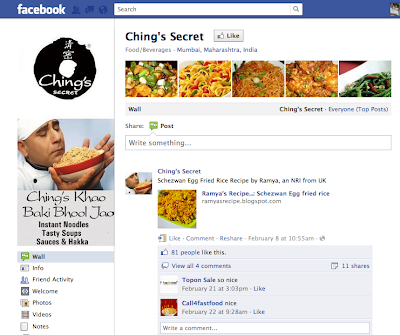

Marketing on social media can be tricky. Be careful about the following.
  1. Facebook ads come cheaper if you are taking the user to a face book page
  2. Again laser target users data that Facebook provides
  3. Manage user expectation of the Facebook page quite carefully. It will be your soundbox, but for the world to speak into.
  4. Be ready to handle criticism 
  5. Your product can become Viral " So don't think viral", just make sure your product or service is good, it will automatically go viral if it excellent.
  6. paid social media will yield low CRT's but are very high on the branding matrix.
Things to be managed
  1. Get good content writers for a social campaign 
  2. engage with your customers and understand there problems 
  3. use some kind of tracking even "UTM" parameter based will be good.

Last but not a small portion will be media: huh!! media, so what was all the stuff that I mentioned above.

The answer lies to the training all of have received in the digital marketing arena.

Media means : Larger website's / display banner / innovative media like road blocks/ shosh etc etc...

So Media. A very essential part of any digital marketing activity. Not sure How relevant is it for a start-up, but if the start-up has some decent monies, then he can invest some of it into large portals for  a few days, so get some brand salience going.

Things that will always trouble a start-up on large media properties  are as follows
  1. What will I get 
  2. Will it perform 
  3. Will my technology holdup against a flood of traffic coming from a large media activity. (Trust me, I have seen this fail for a lot of companies)
  4. Why should I pay on a CPM basis, when I am looking at performance
  5. Large portals : Should I go direct or go thru an agency and pay a commission for the media purchase.
The above are just teething issues, So don't panic,pls follows a few simple things.
  1. Insure that you use tracking parameters in the landing page url 
  2. Use third party ad-serving like zedo, double click etc.

So what would a typical digital media plan for a startup look like. 

The Idea over here is to start with a plan like the one mentioned above. But being a digital plan, this can change into any one the following , based on a hourly learning that you will be getting while running the campaign.


Try all mediums and see what is working for your product / service.

Happy Planning & A great Digital campaign execution...

Reach out if you need any help.

Friday, February 10, 2012

Buying Efficiencies : Continued ... CPC (Cost per Click), digital marketing

Topic Continued : Media buying efficiencies : The Great CPC media...

I know this took a lot of time to come thru, but thrust me it will be worth the wait(weight for some).

So here's my take on getting efficiencies into CPC purchase. 

When you buy CPC in the market today, this is what it is sold as. 
  1. It is the most effective media purchase.
  2. It is like buying user engagement.
  3. It is user engagement.
  4. The user has better intent.
  5. It's like buying on Google content network (Hehe Haha)
  6. you just cant go wrong on this media currency purchase
Some of the things said above are to some extent true, but don't follow them blindly. 

The Catch 
  1. Most of the media planner buy inventories of publisher reporting ( It is changing but not completely).
  2. The Tech involved in tracking clicks on the advertiser side is non existent ( it is changing but the tracking used is crazily ineffective.)[I will explain this later]
  3. Analytic are completely missing... post click or even the click itself.
  4. There is this absurd rule prevalent in the market that click bought will result into visitors...[ Again I will explain this later]
  5. Most of the clicks bought are on blind networks.... interestingly they do some crazy business in India.
So here is the explaining and how you can avoid yourself from falling into one of the sales pitches mentioned above and bring more efficiencies to your media plan. 

CPC is a good inventory to buy for sure, no doubt about it. It is cost effective, reliable and can be scaled up or down based on your media spend requirements and communication objectives. Having said that, please follow the some of the below mentioned rules of engagement while buying CPC inventory. 
  1. Know the source of inventory. lots of time the planner does not know where in the world are clicks coming from .
  2. Get basic analytic code implemented on the click tag " UTM" parameters, if you are using google analytic for tracking
  3. Serve banners where ever possible. Use good efficient technology to serve ads directly into any ad network. It might "add" a few RUPEEEESSS to your budget but trust me it will all be worth it in the end . Technologies like "ZEDO" can come handy, if you don't want to invest in double-click and also get Indian support 24x7 , there are a few more... let me know if you need any help here.
  4. Get your ad serving partner to implement click fraud detection to insure best buys and no fraud happening on the campaign.
  5. Get your tech partner to do the correct geo targeting and not get clicks from unwanted territories. 
  6. Also if you are also using some attribution technology pls drop cookie to bucket users on to the site, enabling you better tracking over a period of time and also measure the quality of the traffic. 
After you have taken corrective step while buying, keep a strict monitoring on the campaign when it is live to ensure that all that was planned is being delivered on the dot. 


Please keep in mind that a few things will go wrong, specially in India on CPC inventories.
  1. Amount of clicks bought will not reflect in similar numbers on the analytics. there are a few reasons for this some true some myths... a separate post for that for sure.
  2. Geo targeting will be off the mark by 10-30%. i.e. 10-30% of the geo targeted area will not be able to see your ads so less clicks and 10-30% of people out side of your targeted area will see your ads, so wastage.
  3. Not All CPC networks / publishers will let you run ad-tags. So buy from the people you trust and not some fly-by-night site operator etc. 
Also use google analytic as one source of information and not the only truth. Use a parallel tech, or simply use server log reports to compare google analytic for a better insight, or use a "paid tool".

Also to note that buying CPC on networks or mainstream publishers is not like buying on google content network. In google, they have a lot of tech going into targeting, fraud detection, measure-ability, real-time bidding etc.
PS. New Kid on the BLOCK : COST PER VISITOR.Who says "Don't buy clicks", buy visitors. (Pls do not confuse this with something called as FPV or Full page views)  more performance to the advertiser... Interesting.. right.. 


Next post : Cost per "ACTION"... that's where all the action is... will be posting an undate on CPM efficiencies also , do read. 


Monday, February 6, 2012

Digital Traffic Attribution & User tracking : A Basic Framework

Schematics of the Attribution technology:  on digital marketing.

The last time I wrote on attribution. Got a few requests on how the attribution technology should work. Thought I should BLOG it down for people to develop own technology, rather than hiring it at exorbitant pricing.

Things required before getting to develop the product.
  1. Knowledge on Cookie, super cookie.
    1. Cookie length Vs Cookie Validity
  2. Referring URL
  3. Traffic Quality 
    1. Source 1 Vs Source 
    2. Paid Vs Free 
  4. Business Rules
    1. First Referrer vs Last Referrer
    2.  Many referrer 
  5. Multi Channel Digital Channel 
    1. Media 
    2. Search 
    3. Affiliate 
    4. Mailer 
    5. Social
    6. Direct
Why is attribution so important on the multi channel digital marketing strategy. Some of the reasons for this are as follows.
  1. Large media monies are being spent to get customers on the online space for
    1. Brand popularity
    2. Transaction
    3. Reach
    4. Frequency
    5. Top of the mind recall etc etc
    6.  
    1. To provide the logical information to marketer about what channel is working
    2. Performance is the key for a digital marketing campaign to be measured.
    3. To know what worked best for the brand/ product / service on the digital channel.
    One of the most interesting things to know is the fact that most companies that are in the eCommerce space in India don’t have this in place and don’t seem to have any possible solution to develop it.

    Issues a marketer faces in attribution if the technology is not good are as follows:-
    1. Multiple refers show us as claimants to a particular interaction
    2. Allocation become an issue if the traffic provider is a paid one
    3. User journey cannot be defined and hence measured at various steps
    4. Budgeting for next campaign becomes an issue as you don’t know what worked the best for you.
    So here goes my attempt into developing a schematic to a digital marketing attribution/ user tracking technology.
    The landscape 

    The advertisers landscape for attribution
    The user Journey


    Stage 1 : Research. 


    The main thing to notice over here is the fact that the user might choose to engage with the brand using many channels or only one, but for a fact he will use two or three channels during his research work before buying a product . So it is important to allocate this user initially to the source of his first visit. Then with the same cookie id keep on updating his profile, add various data points like IP address(this way you can build the users profile over a period of time, city, service provider etc etc.)  


    Now once the users moves from this bucket into the consideration set, you can add the  following data to the same cookie id. 


    Stage 2/3 : Consideration / re-evaluation 
    Product being the main, keep on adding the products that he browses thru, along with date &  time of the visit (again adding more to his user profile). Within this set of data, I am sure you would also capture the source of the user, the referrer, the publisher etc.
    The source data / referrer data will be helpful later when we will look at the sales attribution. (Which the topic is all about). 

    Stage 4 : Purchase  


    In the sales stage of the user journey, just add the product purchased data to his profile in the same cookie id.


    This is important as this is also one of big mistake large eCom companies do when they are doing cookie tracking on repeat visitor, they continue to show even the purchased product in banners when the users is being re-targeted on re-targeting networks out side the site or they even keep on throwing up the same product in the consideration set when the user is on the site again, thus adding nuisance value to the user's website journey.


    Store the information both ways, If the user has purchased the product then store all the cookie id information into his login id., for future reference and his loginid details into the cookie id, enabling you to target or re-target him better. Next time the user pops onto your site or on your re-targeting network.


    Important thing to note over here is that users who either delete cookies or come back after the expiration of the cookie validity period can be found if they again log into the system, enabling advertisers to offer a more customized product offering to them. 


    Coming back to attribution of sales to the media channel.


    Now that we have the details no the user and the road he used to travel to the site.

    Now based on the business logic. first referrer wins or last referrer wins scenario you can attribute sales. 

    Also if you organization believes in fairly compensating all  the parties in the user journey then also this data set would help in doing so.

    This technology if developed can enable the advertiser to also do the following.
    1. Fire tracking pixels of media channels based on business logic.
    2. De-dupe sales data across media channels.
    3. Find effective data for more efficient buying on the digital media.
    4. provide some piece of mind to its eCom managers, doing Multi channel.
    Will be happy to receive your feedback on the same, or if you feel I have missed out on some thing(s) please send me a mail or comment, will try to help and resolve your attribution issue.