Tuesday, February 28, 2012

Digital advertising strategy for a Startup in india.

A few days back I met some one, who is currently planning to do a start-up and wanted my help on making a digital advertising plan. That gave me an idea to write about a strategy on digital advertising for a start-up.

In the current sate of start-up affairs in India, where first round of funding raises anywhere between 0.2-5 million USD's, the idea was to develop a methodology where even with a shoestring budget it is feasible to do some bit of digital advertising. This is primarily because the first round of funding (Forget VC's, even Angel's don't fall) happens after validating the concept and the acceptability of the product / service  by its users.

I am presuming the following. 
  1. A start-up is a company where one/two/three/"N" people gather, focused on one concept and an un-stopable passion of doing something big in life.
  2. Shoe String budget : Small, family and friends round of investment[100K-1Million INR]
  3. This is just for digital media and the objectives to be met for the concept to be realized and not a BIG ticket marketing campaign .
  4. Objectives to be met.
    1. Get relevant target group(TG) traffic.
    2. Get the visitor to perform the desired "Action". (Action = Any objective that will help the advertiser ascertain that the product / services being offered is valuable to the user and has a potential of growth.this could be sale / registration / download etc etc.)
  5. Attribution Technology is in place [Even a basic one, not the one I proposed in an earlier post]
    1. Action confirmation pixel tracking. [Thank you page placement of pixel]
    2. UTM parameter based traffic allocation and tracking
  6. Creative development is is place. [Even if it is not, accessibility to good resources is]
So here is my take on the digital advertising strategy for a start-up. ;-)


The Four Pronged Approach . 

Mail:Search:Social:Media (I am going to Coin this as the "M-SS-M" strategy for Start-up)


The above can be classified into a Media mix, where reach and frequency will be defined by the target audience and the watering holes where the TG can be found. 

Let me take an example to explain this in a more understandable manner. 

eg.
Startup : " Nutssabharwal Realestate". that's my handler on twitter ;-)@nutssabharwal


Objective of the company : Sell's real-estate projects in Delhi & NCR to customers interested in either buying  for them selves or looking for a high return investment.

Now Pls understand that this company cannot in wildest of imagination sell apartments online. so what will the online medium do for them. 

Simple : Get them interested parties, and also create a general awareness in the markets they are catering to. 

Objective of the campaign : Get Leads using digital marketing for real-estate from Delhi NCR region, preferably male, Age 35+.

Strategy : Let us understand the watering holes for this client.

Budget : 1lacs - 10 Lacs on advertising.

Before we get into the strategy. here is a quick look at some currencies which are used to buy media on the digital platform. 


Hope this is clear before you proceed further.
.
.
.
No >>So a quick explanation.Courtesy Wikipedia

CPM : Cost per mille (Thousand)

CTR : Click Thru rate

CPC : Cost per click

OSC : On Site Conversion or Conversion rate

CPA : Cost per action

So the above Graphic would be read some thing like this:

Media purchased at CPM of INR 100. If it yields a 1% CTR then the total clicks would be 10 in INR 100 = CPC of INR 10, now if these ten click yield me even 1 conversion at OSC of 10% then my CPA would be INR 100. 

Clear : >> Hope so.. if not .. don't read further, send me a mail.

Going back to "MSSM" strategy.

First Of the block :
Mailers : Get hold of some opt-in databases.  " Please don't buy databases(10 Million Email id's for INR 1200 kind) , it is criminal and will put you / your brand in the spam circle immediately"

Some of the mailer inventories are available on the following currencies :
  1. Cost per send. 0.20/- Paise to INR 4/-. depending on the targeting and laser precession present with the opted-in database manager.
  2. Cost Per Open : INR 2 - INR 3
  3. Cost Per Click - INR 6 - INR 25/30.
eg. of such inventories. 
  1. Job site / Job Boards [Inventory can be targeted based on income/age/demographic]
  2. Travel Site OTA's, Holiday sites
  3. Real-estate Sites
  4. E commerce sites
  5. Loyalty membership sites

Please Note : @ an average INR .50 P mailer inventory come to INR 500 CPM, which is the most expensive inventory that you can buy in the Indian Internet Space. The mailer inventory has a three step process instead of a two step process for a normal web inventory

The three steps to a mailer : Step1--->Send --Step2--> Open--Step3--> Click-->>>>

A good mailer inventory should be able to deliver at least a 10% open rate and post open a 10% click thru rate. So a 0.20 Paise send will be equal to INR 20 per click.

So for this medium, it is good if you can buy inventories on a cost per click or cost per open . For a good media plan, a mailer inventory that can be bought on a cost per click at INR 5-7 /- is a fantastic buy, the reasons can be many but the most critical is that fact that a mailer carries more information than a banner and the user who is clicking on a mailer is most likely to have a better intent.(Subjective, but this is based on my experience)

Some of the things to worry about mailer inventories are as follows.
  1. OPT-in inventories only, you don't want to fall into spam filter on day one of your product launch.
  2. Don't buy incentive based mailer inventories, where people are paid to open the mail and click
 Some important tips. 
  1. The best email creative are the one that have some offer or a discount coupon. Use this in your first mail shot. Giving Incentives to user to use your product service for the first time is never frowned upon. Use mailer as coupon distribution lists.
  2. Get visitors to register & get feedback if possible.
  3. Use less images and little text, come to the point from the word go. 
  4. Subject lines are the ones that get the person to open the mail, so think very carefully about them. Don't think its your product, get into the users shoes and think what will excite "me". Note : Don't oversell, customers have a way to detect your oversell.
  5.  Buy Precision, as mailer can provide some of the best targeting options.
  6.  As always use a third party click tracking, If possible with fraud detection 
  7. Add UTM parameter for you to do basic attribution for the campaign.
Search : The god media, developed by Google, executed the best by Google and now the largest media company on the digital space in India.

Objective of search :Reach out to users when they are looking out for you.
If mailer is a push Medium, Search engine marketing is pull.


I am currently only highlighting the pull based aspect of search engine marketing and not some of the other ones like Search Engine Optimization & Google content network. 

Also I am talking about Google right now, a more evolved buyer can try Bing as well. Google currently has the largest market share.

The Idea for a shoe string budget is to focus energies on what is get-able on a short sprint rather than the long haul.

So focus on the Google campaign should be.
  1. Keywords that are closest to the product / service being offered
  2. "Exact Match" on Google ad words and not  "Broad Match"
  3. Focus on keywords that have an action word. Like for property would be. Buy / book / best price.
  4. Geo target to your competency area "Delhi" for the business above.
Some things to worry about
  1. Create ad text that is to the point.
  2. Add action words like book / buy / try 
  3. Offer a instant gratification to the first few buyers / inquire. 
    1. More Interesting maybe Every day for a week, it will for sure get some social mileage as well. 
  4. Get them to connect on a social platform. Instead of a lead form, connect using Facebook / twitter. Enabling you to push content or a special offer in the future as well.
  5. Put conversion tracking codes on the thank-you page of registration or sale.
Maybe a repetition, but I have to repeat. 
  1. Pass UTM parameters. 
  2. All click bought will not be equal to clicks, so please live with it
 Some interesting things to keep a watch out for.

  1. Bounce rate is something you should read deep into. between 20-30% is good.
  2. Use Google analytical tools to see where the user is clicking on the page. What is getting the best response. 
  3. Have one / two / three  landing pages ready for doing a quick A-B testing.

Social Media : The new kid "ON" the block... so ' what they say.

Interesting media to spend on.
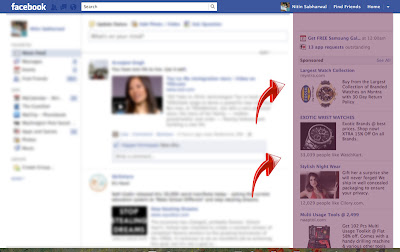


So taking a leaf out of my earlier written article : "Facebook marketing in India for starters".  It is important that as a start-up you have a Facebook & a twitter id for people to connect with. This can have various benefits.
  1. Use Facebook social connect to get people to register on your site. 
  2. Use twitter to send updates at no extra cost to users. 
  3. Get instant feedback on your products / features from existing users without have to hire a analyst .
A sample face book page for a company.


Marketing on social media can be tricky. Be careful about the following.
  1. Facebook ads come cheaper if you are taking the user to a face book page
  2. Again laser target users data that Facebook provides
  3. Manage user expectation of the Facebook page quite carefully. It will be your soundbox, but for the world to speak into.
  4. Be ready to handle criticism 
  5. Your product can become Viral " So don't think viral", just make sure your product or service is good, it will automatically go viral if it excellent.
  6. paid social media will yield low CRT's but are very high on the branding matrix.
Things to be managed
  1. Get good content writers for a social campaign 
  2. engage with your customers and understand there problems 
  3. use some kind of tracking even "UTM" parameter based will be good.

Last but not a small portion will be media: huh!! media, so what was all the stuff that I mentioned above.

The answer lies to the training all of have received in the digital marketing arena.

Media means : Larger website's / display banner / innovative media like road blocks/ shosh etc etc...

So Media. A very essential part of any digital marketing activity. Not sure How relevant is it for a start-up, but if the start-up has some decent monies, then he can invest some of it into large portals for  a few days, so get some brand salience going.

Things that will always trouble a start-up on large media properties  are as follows
  1. What will I get 
  2. Will it perform 
  3. Will my technology holdup against a flood of traffic coming from a large media activity. (Trust me, I have seen this fail for a lot of companies)
  4. Why should I pay on a CPM basis, when I am looking at performance
  5. Large portals : Should I go direct or go thru an agency and pay a commission for the media purchase.
The above are just teething issues, So don't panic,pls follows a few simple things.
  1. Insure that you use tracking parameters in the landing page url 
  2. Use third party ad-serving like zedo, double click etc.

So what would a typical digital media plan for a startup look like. 

The Idea over here is to start with a plan like the one mentioned above. But being a digital plan, this can change into any one the following , based on a hourly learning that you will be getting while running the campaign.


Try all mediums and see what is working for your product / service.

Happy Planning & A great Digital campaign execution...

Reach out if you need any help.

Friday, February 10, 2012

Buying Efficiencies : Continued ... CPC (Cost per Click), digital marketing

Topic Continued : Media buying efficiencies : The Great CPC media...

I know this took a lot of time to come thru, but thrust me it will be worth the wait(weight for some).

So here's my take on getting efficiencies into CPC purchase. 

When you buy CPC in the market today, this is what it is sold as. 
  1. It is the most effective media purchase.
  2. It is like buying user engagement.
  3. It is user engagement.
  4. The user has better intent.
  5. It's like buying on Google content network (Hehe Haha)
  6. you just cant go wrong on this media currency purchase
Some of the things said above are to some extent true, but don't follow them blindly. 

The Catch 
  1. Most of the media planner buy inventories of publisher reporting ( It is changing but not completely).
  2. The Tech involved in tracking clicks on the advertiser side is non existent ( it is changing but the tracking used is crazily ineffective.)[I will explain this later]
  3. Analytic are completely missing... post click or even the click itself.
  4. There is this absurd rule prevalent in the market that click bought will result into visitors...[ Again I will explain this later]
  5. Most of the clicks bought are on blind networks.... interestingly they do some crazy business in India.
So here is the explaining and how you can avoid yourself from falling into one of the sales pitches mentioned above and bring more efficiencies to your media plan. 

CPC is a good inventory to buy for sure, no doubt about it. It is cost effective, reliable and can be scaled up or down based on your media spend requirements and communication objectives. Having said that, please follow the some of the below mentioned rules of engagement while buying CPC inventory. 
  1. Know the source of inventory. lots of time the planner does not know where in the world are clicks coming from .
  2. Get basic analytic code implemented on the click tag " UTM" parameters, if you are using google analytic for tracking
  3. Serve banners where ever possible. Use good efficient technology to serve ads directly into any ad network. It might "add" a few RUPEEEESSS to your budget but trust me it will all be worth it in the end . Technologies like "ZEDO" can come handy, if you don't want to invest in double-click and also get Indian support 24x7 , there are a few more... let me know if you need any help here.
  4. Get your ad serving partner to implement click fraud detection to insure best buys and no fraud happening on the campaign.
  5. Get your tech partner to do the correct geo targeting and not get clicks from unwanted territories. 
  6. Also if you are also using some attribution technology pls drop cookie to bucket users on to the site, enabling you better tracking over a period of time and also measure the quality of the traffic. 
After you have taken corrective step while buying, keep a strict monitoring on the campaign when it is live to ensure that all that was planned is being delivered on the dot. 


Please keep in mind that a few things will go wrong, specially in India on CPC inventories.
  1. Amount of clicks bought will not reflect in similar numbers on the analytics. there are a few reasons for this some true some myths... a separate post for that for sure.
  2. Geo targeting will be off the mark by 10-30%. i.e. 10-30% of the geo targeted area will not be able to see your ads so less clicks and 10-30% of people out side of your targeted area will see your ads, so wastage.
  3. Not All CPC networks / publishers will let you run ad-tags. So buy from the people you trust and not some fly-by-night site operator etc. 
Also use google analytic as one source of information and not the only truth. Use a parallel tech, or simply use server log reports to compare google analytic for a better insight, or use a "paid tool".

Also to note that buying CPC on networks or mainstream publishers is not like buying on google content network. In google, they have a lot of tech going into targeting, fraud detection, measure-ability, real-time bidding etc.
PS. New Kid on the BLOCK : COST PER VISITOR.Who says "Don't buy clicks", buy visitors. (Pls do not confuse this with something called as FPV or Full page views)  more performance to the advertiser... Interesting.. right.. 


Next post : Cost per "ACTION"... that's where all the action is... will be posting an undate on CPM efficiencies also , do read. 


Monday, February 6, 2012

Digital Traffic Attribution & User tracking : A Basic Framework

Schematics of the Attribution technology:  on digital marketing.

The last time I wrote on attribution. Got a few requests on how the attribution technology should work. Thought I should BLOG it down for people to develop own technology, rather than hiring it at exorbitant pricing.

Things required before getting to develop the product.
  1. Knowledge on Cookie, super cookie.
    1. Cookie length Vs Cookie Validity
  2. Referring URL
  3. Traffic Quality 
    1. Source 1 Vs Source 
    2. Paid Vs Free 
  4. Business Rules
    1. First Referrer vs Last Referrer
    2.  Many referrer 
  5. Multi Channel Digital Channel 
    1. Media 
    2. Search 
    3. Affiliate 
    4. Mailer 
    5. Social
    6. Direct
Why is attribution so important on the multi channel digital marketing strategy. Some of the reasons for this are as follows.
  1. Large media monies are being spent to get customers on the online space for
    1. Brand popularity
    2. Transaction
    3. Reach
    4. Frequency
    5. Top of the mind recall etc etc
    6.  
    1. To provide the logical information to marketer about what channel is working
    2. Performance is the key for a digital marketing campaign to be measured.
    3. To know what worked best for the brand/ product / service on the digital channel.
    One of the most interesting things to know is the fact that most companies that are in the eCommerce space in India don’t have this in place and don’t seem to have any possible solution to develop it.

    Issues a marketer faces in attribution if the technology is not good are as follows:-
    1. Multiple refers show us as claimants to a particular interaction
    2. Allocation become an issue if the traffic provider is a paid one
    3. User journey cannot be defined and hence measured at various steps
    4. Budgeting for next campaign becomes an issue as you don’t know what worked the best for you.
    So here goes my attempt into developing a schematic to a digital marketing attribution/ user tracking technology.
    The landscape 

    The advertisers landscape for attribution
    The user Journey


    Stage 1 : Research. 


    The main thing to notice over here is the fact that the user might choose to engage with the brand using many channels or only one, but for a fact he will use two or three channels during his research work before buying a product . So it is important to allocate this user initially to the source of his first visit. Then with the same cookie id keep on updating his profile, add various data points like IP address(this way you can build the users profile over a period of time, city, service provider etc etc.)  


    Now once the users moves from this bucket into the consideration set, you can add the  following data to the same cookie id. 


    Stage 2/3 : Consideration / re-evaluation 
    Product being the main, keep on adding the products that he browses thru, along with date &  time of the visit (again adding more to his user profile). Within this set of data, I am sure you would also capture the source of the user, the referrer, the publisher etc.
    The source data / referrer data will be helpful later when we will look at the sales attribution. (Which the topic is all about). 

    Stage 4 : Purchase  


    In the sales stage of the user journey, just add the product purchased data to his profile in the same cookie id.


    This is important as this is also one of big mistake large eCom companies do when they are doing cookie tracking on repeat visitor, they continue to show even the purchased product in banners when the users is being re-targeted on re-targeting networks out side the site or they even keep on throwing up the same product in the consideration set when the user is on the site again, thus adding nuisance value to the user's website journey.


    Store the information both ways, If the user has purchased the product then store all the cookie id information into his login id., for future reference and his loginid details into the cookie id, enabling you to target or re-target him better. Next time the user pops onto your site or on your re-targeting network.


    Important thing to note over here is that users who either delete cookies or come back after the expiration of the cookie validity period can be found if they again log into the system, enabling advertisers to offer a more customized product offering to them. 


    Coming back to attribution of sales to the media channel.


    Now that we have the details no the user and the road he used to travel to the site.

    Now based on the business logic. first referrer wins or last referrer wins scenario you can attribute sales. 

    Also if you organization believes in fairly compensating all  the parties in the user journey then also this data set would help in doing so.

    This technology if developed can enable the advertiser to also do the following.
    1. Fire tracking pixels of media channels based on business logic.
    2. De-dupe sales data across media channels.
    3. Find effective data for more efficient buying on the digital media.
    4. provide some piece of mind to its eCom managers, doing Multi channel.
    Will be happy to receive your feedback on the same, or if you feel I have missed out on some thing(s) please send me a mail or comment, will try to help and resolve your attribution issue.


    Tuesday, January 31, 2012

    Doing eCommerce in INDIA?? !! why it will work.

    Doing eCommerce in India ?? !! why it will work.
    First things first. eCommerce has stayed in India, Ten years and counting.
    It is only recently that is has become the flavor of the season for the VC’s for the second time. I remember in the 2000-2003 era, it was the same… the millions were less but the flavor was as strong … I remember meeting people during that time wanting to start eCommerce sites. 
    Some survived, some changed hands, some perished or I should say got burnt in HELL… And now it’s a rebirth. 
    Travel is the biggest example of this success. And me saying this was like saying that there is an elephant in the room. 
    Why did this work! According to me for only one simple reason, digital delivery of the product. 
    eTickets did not get into the rut of  last mile courier, cost of delivery of the product and the ecosystem of the GDS’s made it easy to manage product inventories. Will this survive with all the airlines now providing similar services directly on their site? We will have to wait and see. As of now its happy times (my perception) for the companies and the airlines and not to forget the investors, specially the investors as they have seen one listing already and I am sure at least one more on the anvil. I am sure the next big-ticket item to go the same heights will be online life insurance covers. 
    Now the non-travel sector eCommerce is something of a worry as of now (early days of the round two).  But I am sure it will survive. 

    Here is my take on it.

    Like all starting retail shops in the market near you, the first most important
    thing is to get customers inside the store. Once the user is inside, then let the
    user experience, price of the product and the service support take over .


    But to take that space in the market, you have to pay security deposit, high retail rentals, or if you have lots of monies (inherited), you buy the place. All of this the retailers understands is called investment into the business, which in most cases they don’t even think of recovering as that is the pillar on which there business is built. And if it is bought space then that investment will pay for itself in India with real-estate prices going up up away. 
    Comparatively: An online retailer, needs to open a website by paying a couple of thousands dollars to developers and he is up and about. With payment gateway, logistics support for deliveries etc.
    Now the advantage that a small retailer in a market has is that he has a captive audience to cater to, the foot falls in the market, enables him to scale the business to a certain level and for the next one year he will only think of recovering the operating costs, with some monies for himself in it. Bare Bone, no fat. If he survives for TEN years, is when he thinks he has made it big.
    On the other side, an online retailer has to struggle to get this foot fall or visitor, and in most cases the first visitor is actually a paid 4 visitor by the website owner.
    I think this is essential, as in the clutter of the eCOM shops; you have to tell that you exist; this is where the eCOM companies are spending most of the monies.
    Now there are a few avenues in this line of approach.
    Some of them are being tested out by various eCOM sites.
    1. Coupon codes. : On the eCOM side, distribution is the key to success, and coupon distribution is one of the key distribution articles, it similar to flyers that the offline people send to entice people living in the locality to come and buy at there shop, and also give incentives to do so.
    2. Discounts / Best price spiel: Another one, which is used effectively by the larger eCOM companies. They believe SCALE will Trip over everything on the Internet. Some companies have taken it to the level where they are selling stuff even below its buying price. Short-term solution with a long team impact. We have companies in the offline space who did exactly this (sabka bazaar is one such example, I don’t think they sold product below buying price, but good discounts on the MRP and that too on low ticket items)
    3. Gather distribution lists: All the deal sites today in India are aggregating users, getting them to register for some instant gratification, which they plan to milk over a period of time by sending them products and services at discounts or as special user offers.  This is like the guest book at the normal retail shop.

    Most of the good teams running the eCOM businesses know that they will not make monies now or on the first deal, it will be the 10th -12th – 20th transaction or more that they will breakeven on the money used to acquire the customer.
    Traditional business do not have these matrices to measure up to as they do not have to bear with the fact that the foot falls into their shop has a cost attached to it and they need to make sure that the footfalls buys. There is to some extent no need for this information.Except one stores that I know of that track a conversion ratio of walk-in to purchase. (Croma)
    Interestingly, I am sure you would have noticed in a big mall near you, that shops keep on changing hands. One day it one brand and after three / four months or max a year, the shop changes the brand. Is it to say that offline retail commerce is failing?  

    Having said all the above, the following points is what makes me think that ecommerce will stay and be the next big ticket for entrepreneurs in India.

    1. Easy funding of projects (VC), similar to retail banking doing the first round of funding for the retailer for stocks.  The Risks are higher but so are the returns.[ This is Now, might not be the case middle of the year.]
    2. Smart Technology being made available to test market the shop. Now you can setup a retail shop for as low as 2,000-10,000 per month on SAS platforms like MartJACK. and a few more.( I remember this to be as high as 10 -20 Lacs a few years back, there are a few companies still selling at this price. HUH!!). Test it out and see if a particular vertical works for you.
    3. Last mile puzzle being solved by logistic guys. Courier companies and more deeply integrated into small towns. With some eCOM companies starting their own courier companies to ensure a great delivery experience.
    4. “GST“:  this the Real fuel for eCommerce. This will enable eCOM companies to bill directly form there central warehouse and deliver the product, with out having to bother for state taxes / octroi / completely redundant documentation etc…
    5.  Interesting payment options being made available. Now you have the following. 
      1. Cash on delivery 
      2. Cash before delivery (http://www.gharpay.in/) 
      3. Credit cards 
      4. Debit cards 
      5. Cash cards 
      6. Internet banking 
      7. Instant conversion to EIM @ zero % interest. 
      8. Mobile wallets 
      9. Prepaid vouchers
    6. Govt. Initiatives 
      1. GOVT websites now take e-payments 
      2. Utility bills are being paid online
    7. Security 
      1. One time Password (OTP) 
      2. Instant notification for transaction to registered mobile phones
    8. Social Media proliferation 
      1. Get more feedback on before purchase information 
      2. Flaunt what you just bought attitude. (self esteem and near real-time). 
      3. Get friends to recommend your next purchase.
    9. Comparison Shopping (another biggiee waiting to happen).
    10. Online Media channel on a COST Per CUSTOMER available in INDIA now (last four-  five years, the scale is happening now).
    11. General growth of users who are now transacting on the Internet for the following : Recharge( MOBILE, DTH, Insurance)  / Bank transfers / Online banking / Restaurant booking / buying deals online(discounts)
    Growth in online traffic to eCommerce sites.
    (Courtesy: Hindustantimes.com) , additional insights also available on eCommerce on the lnk below .. 

    And of course the Multichannel digital marketing and offline marketing combined together will help the eCommerce company to delivery to both the users and its investors. So use them wisely. 

    In the end, the only thing that will fail in the eCommerce industry will be teams and not the concept of ecommerce. Be ready for a long haul if you want to make an ecommerce company. If you are starting up an eCommerce site thinking that some one else will buy it out. BIG MISTAKE. think twice or maybe TEN times... :), Not all will get lucky.

    Let me know your feedback. 

    I will be writing on the basic digital strategy for eCommerce site in India. A start-up guide to the same. Hope you all like it. So keep watching this space.

    Friday, January 27, 2012

    Attribution, attribution, attribution ==== Confusion for all ecommerce.

    Attribution, attribution, attribution ==== Confusion for all ecommerce.
    With the boom of ecommerce in India and the eco system evolving, one of the biggest challenges that an ecommerce company faces on the sales side is the digital channel sales attribution.  With media monies being spent in Corers and Corers (all VC monies), all of them grapple with the monster of attribution.
    Speak to any ecommerce digital marketing manager in the eco system and “MULTi” channel is what they say is going to get customers and because it is multi channel, it becomes even more imperative when it comes to attribution.
    Multi channel for an Ecommerce website looks some thing like this.
    1.     Search
    a.     Paid
    b.     NON paid (SEO, which is also paidJ )
    2.     Affiliate
    a.     Networks
                                                   i.     Network 1 (30 day cookie)
                                                  ii.     Network 2 (1 day cookie)
                                                iii.     Network 3 (Session based registration)
                                                iv.     Network 4 (Crazy, my bosses way of cookie-ing)
                                                  v.     Network 5 (blind networks).
    3.     Paid Media
    a.     Display Media
                                                   i.     Website 1 / campaign 1
                                                  ii.     Website 1 / campaign 2
                                                iii.     Website 2 / campaign 1
                                                iv.     Website 2/ Campaign 2
                                                  v.     Website ‘N’/ Campaign ‘N’
    And so on….
    b.     Emails inventories
                                                   i.     Internal (self promotion)
                                                  ii.     External (Opt in inventories)
    4.     Retargeted inventories
    a.     Retargeting network 1
    b.     Retargeting network 2
    5.     Coupon Distribution
    a.     External but digital
    b.     Offline partners (Banks/ Credit card companies)
    c.      Coupon sites (smart guys, all customers love them)
    d.     Cash Back sites (nice to have, but too many have proliferated)
    Coming back to sales attribution
    Issues
    Here are the possible attribution issues an ecommerce marketing manager will face.
    Scenario 1 : Already registered user of a website let say “terimeritshirts.com”( good name, is available right now. J. )
    Step one: gets a mail on his Rediff mail id. (Bought paid media by the site, thru an agency). [day 1]
    Step two: Clicks on the mailer and buys the product.
    Attribution Count: ONE – Rediff wins.  This was a walk in the park for the eCOM marketing manager.
    That was easy. Now let us complicate this
    Scenario 2 : Already registered user of a website let say “terimeritshirts.com”( as mentioned earlier, this domain is available )
    Step one: gets a mail on his Rediff mail id. (Bought paid media by the site, thru an agency). [Day 1]
    Step Two: user goes to site on that day, does not buy product.  [Day 1]
    Step three: See’s a retargeted banner on NDTV.com thru retargeting network 1 [Day 10]
    Step Four: Click’s on the banner goes to the site does not buy.  [Day 10]
    Step Five: Opens his G-mail box, sees a banner in the right hand side (contextual banner). [Day 11]
    Step Six : Clicks on the banner and still does not buy the product. [Day 11]
    Step Seven: On the fifteenth day opens the website directly and buys the product. [Day 15]
    Attribution Count: . Think think : who, where, what…
    See what I mean, and this can go on and on… we can add more permutation and channels in the above example to complicate this further.
    Answer this for Me. ??
    Q. So which campaign according to you got this customer and who would you attribute this sale to and why?
    .
    .
    .
    .
    .
    Spent some this on this one sale. Now imagine if the eCOM marketing manager has to do this for 1000 sales every day … or even more…
    Trust me when I say this almost all eCOM companies suffer from the attribution syndrome for the following reasons.
    1.     All the marketing teams (Paid Search, Media, SEO, Affiliate, brand) work in silos and not cohesively to understand the larger issue.
    2.     Lack of attribution tech to handle this crazy way of tracking sales. Ask the nearest eCOM marketing manager and he still manages this data on a monthly basis on an excel sheet. (If he can get this from some where in his system).
    3.     Business rules not present. (First referrer vs last referrer).
    Solution:
    1.     Run all your campaigns thru a single tracking solution. Use either a Known version of the tech or create our own, and be transparent.
    2.     Set Business Rules.
    3.     Give each digital marketing team lead the larger picture.
    Now you will ask why is this so important,
    Firstly : As an eCOM marketing manager, you should know what works for your brand, site, sales etc.
    Secondly : all sales don’t happen at the same time the visitor comes to your site. eCOM users are smart and want to get the best deal from the website, so they will take time and scout around for the deal or just wait for a opportune time to buy the product.
    And Lastly : Money is at the end of the day money , spending it wisely will ensure that the company and its promoters don’t not have to go for the next round of bank robbery. J .
     Let me know your thoughts.